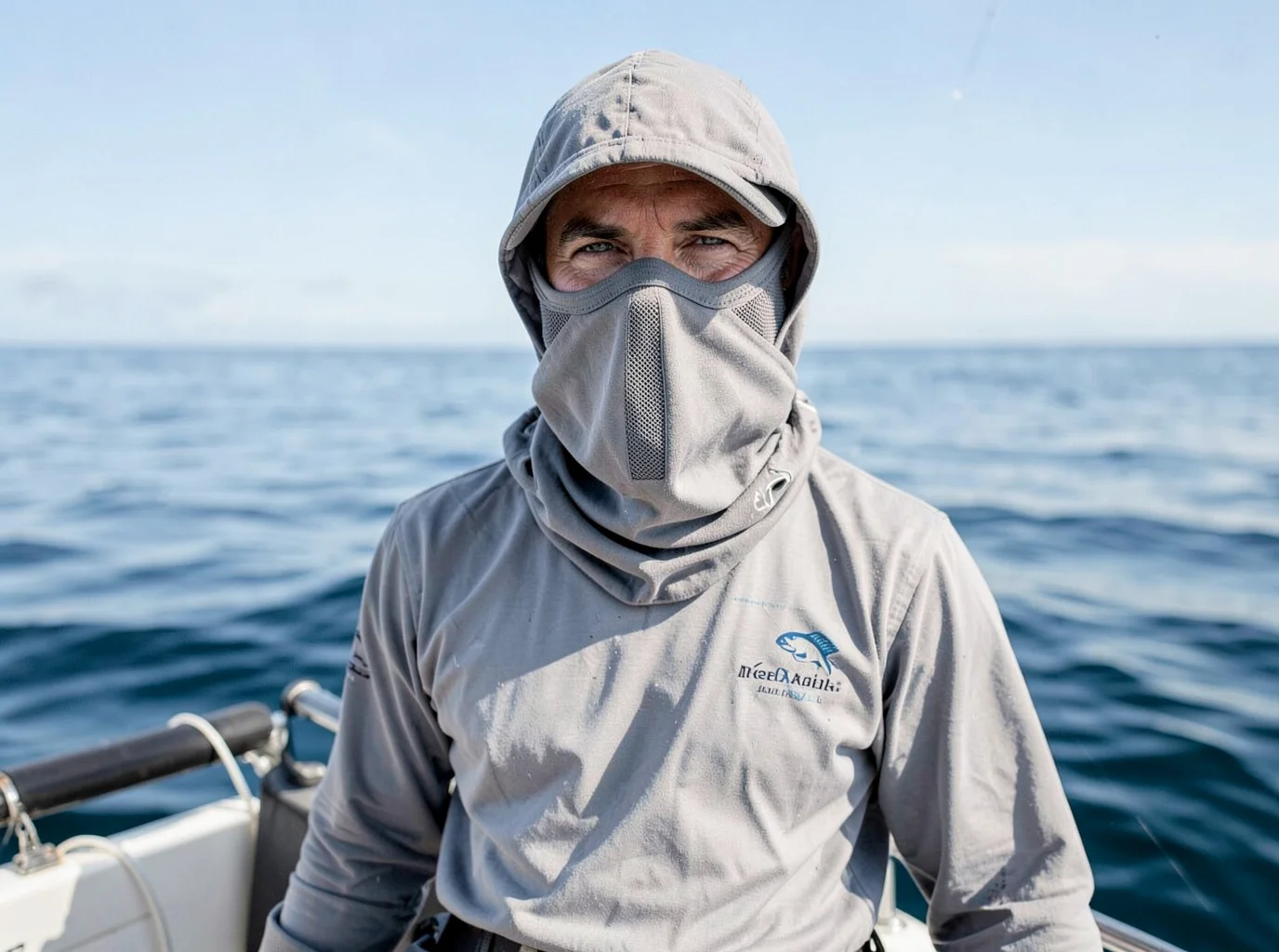
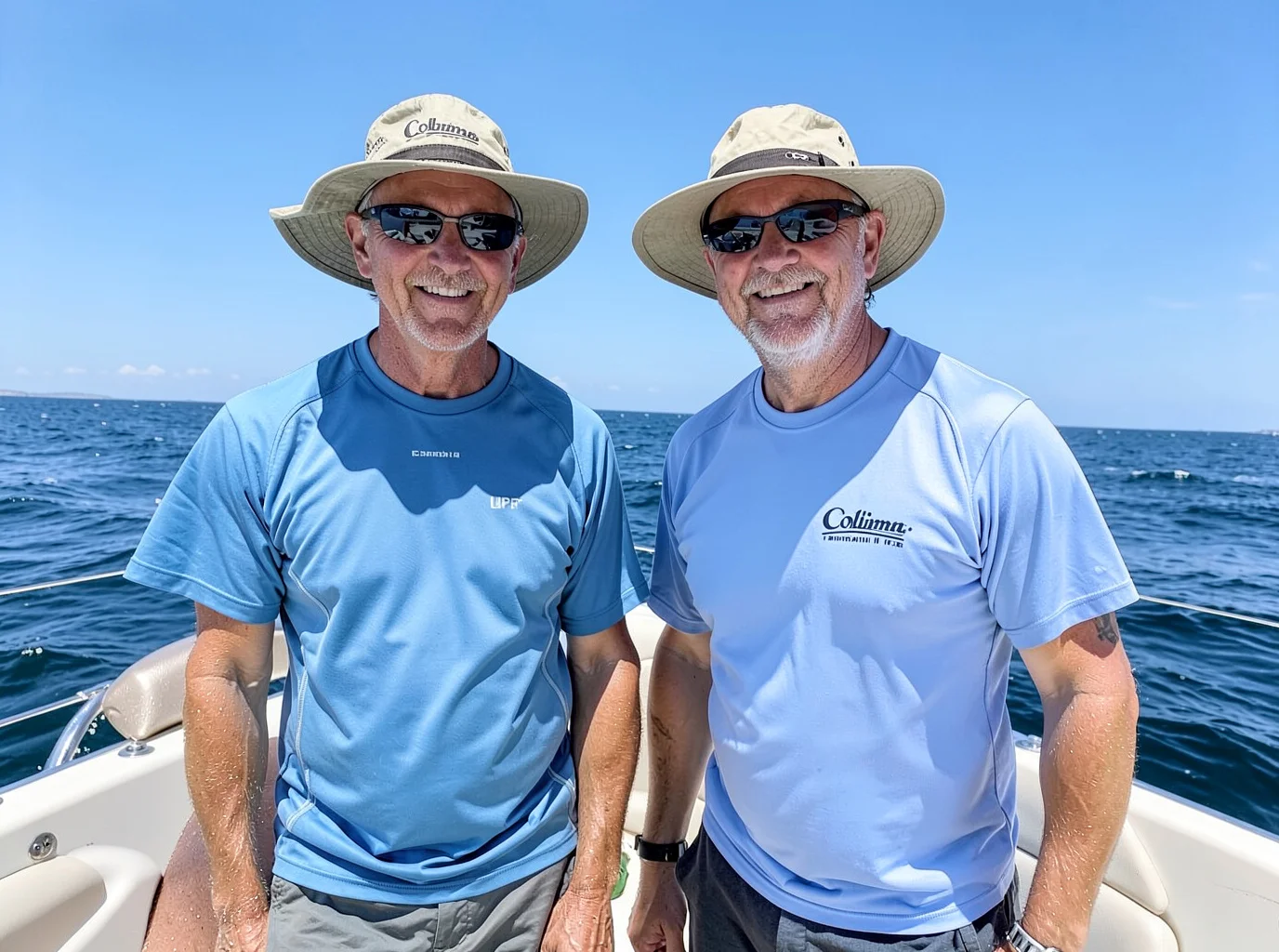
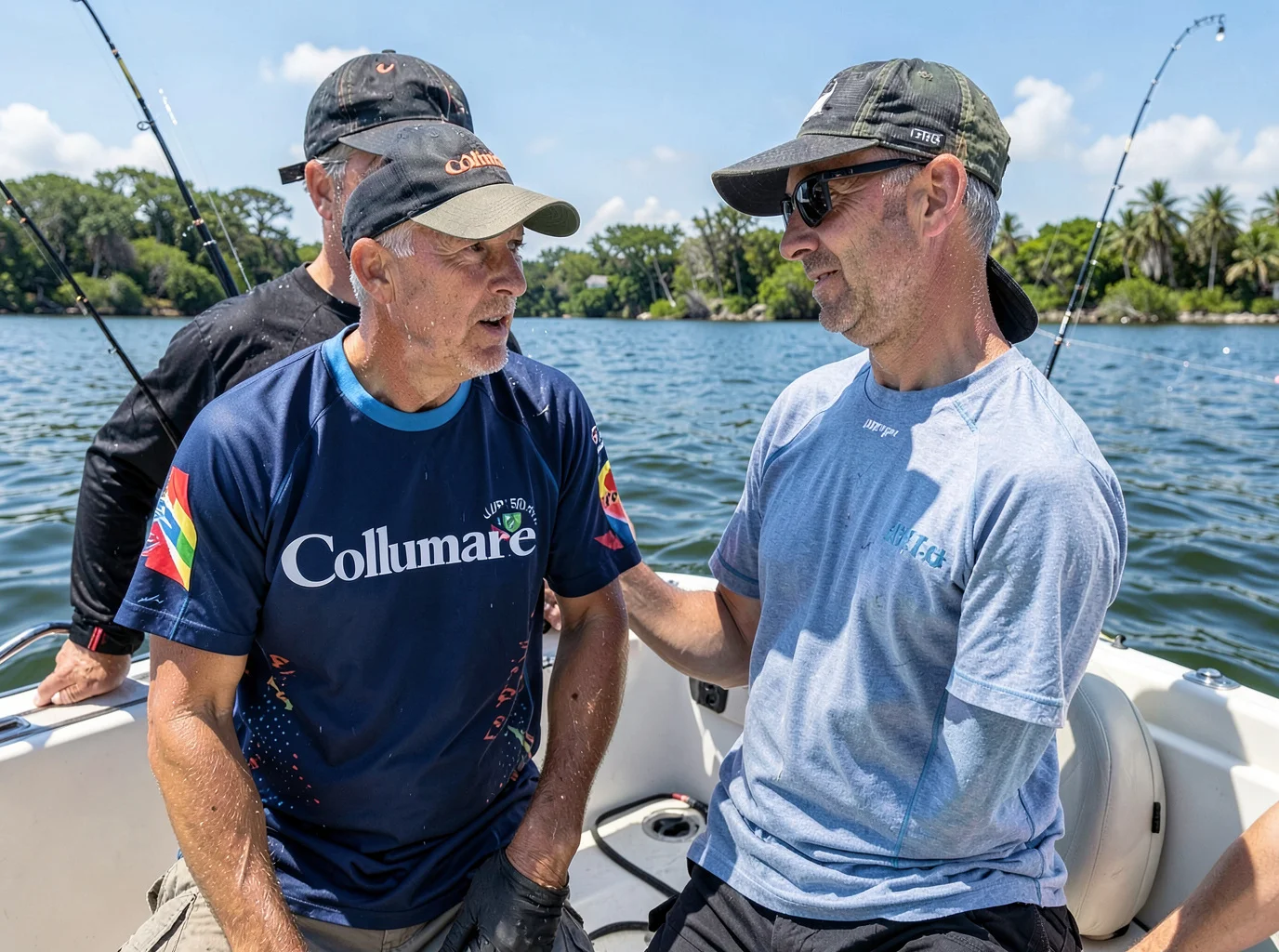
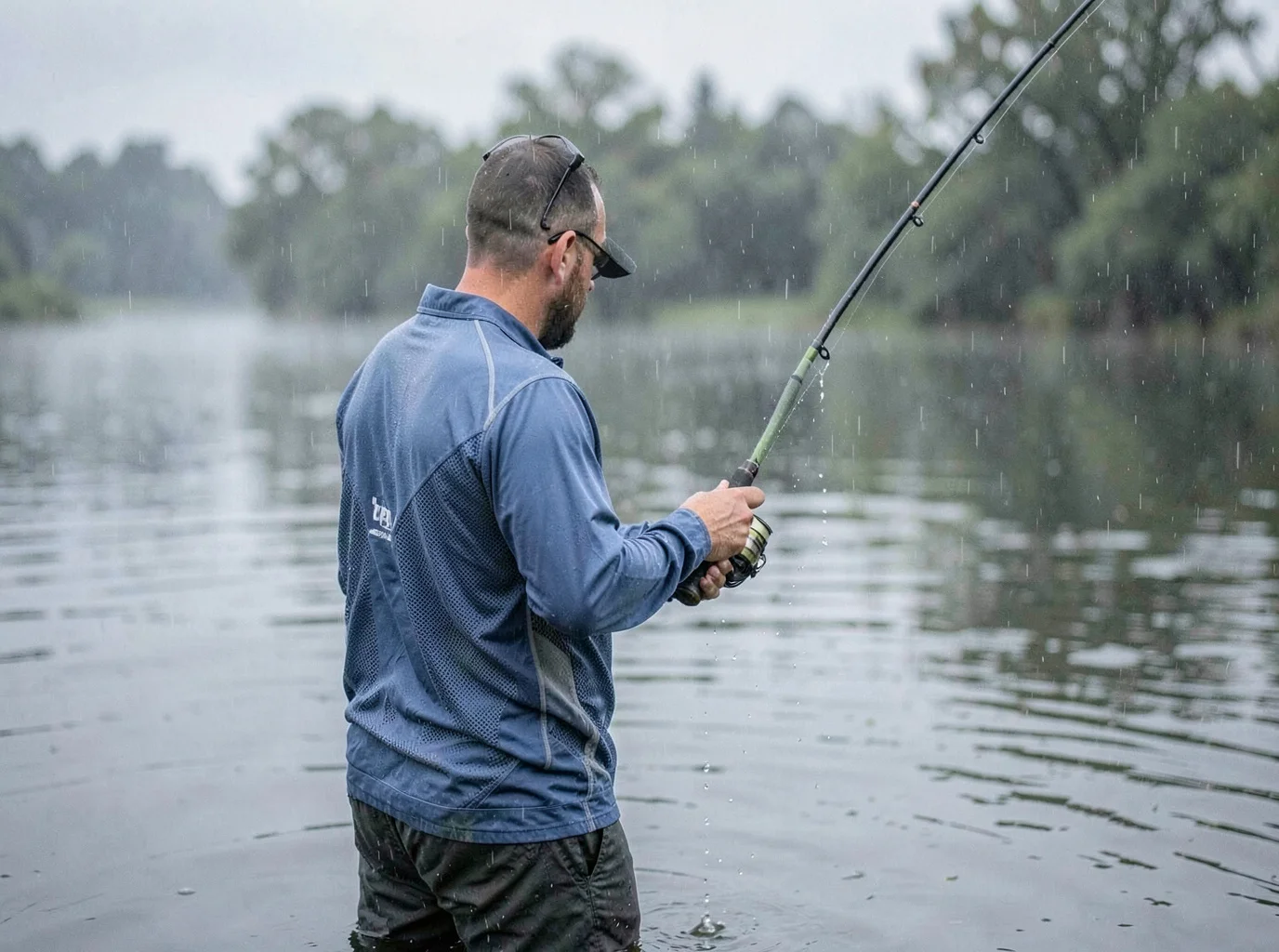
My shoulders peeled like a snake shedding its skin, and I stood in my bathroom at 11 p.m. wondering if I'd made a terrible decision buying a cheap cotton tee for a "quick" fishing trip that turned into six hours of merciless sun. That's the moment I stopped rolling my eyes at guys in long sleeve fishing shirts and started actually reading the tags. Turns out UPF sun protection shirt technology has real fabric science behind it, not just the marketing fluff sewn onto an overpriced Columbia PFG shirt to justify the price tag.Brands can develop custom Fishing Shirts with specified UPF and fabric requirements. I tested it against my sunburned regret. I'm breaking down exactly what a fishing shirt does, what it doesn't, and whether your wallet needs to be involved.
The Sunburn That Made Me Question Regular T-Shirts
Numbers don't lie, and mine were brutal. That "quick" cotton tee I wore clocked in at UPF 5 to UPF 7—so 14% to 20% of UV rays sailed straight through. My shirt was more screen door than sun barrier. Sweat through it during six hours of casting, and that protection craters to UPF 3. For comparison, UPF 30 is the minimum recommended level, blocking all but 3% of UV. UPF 50+ leaves only 2% through. Not every cotton shirt is equally useless, though—a dark tee bumps up to UPF 10–15, and one lab measured a Hanes Beefy-T long-sleeve at a surprising UPF 115. Fabric weave matters more than the "T-shirt" label ever will.A specialized Regular Fishing T-Shirts factory can adjust fabric construction for sun protection.
UPF 50+ Sun Protection: The Most Defensible Reason to Wear One
The number that changed my buying habits is UPF 50. It blocks 98% of UV radiation, leaving only 2% (one-fiftieth) to reach your skin. Compare that to my cotton disaster from earlier, and it's not even close. This is the one benefit of a UPF sun protection shirt I can't argue against, no matter how skeptical I am about gear marketing in general.
There's a real tier system behind UPF ratings. UPF 30–49 counts as "very good" or "good" protection. Below UPF 30 doesn't qualify as meaningfully sun protective. UPF 50+ sits alone at the top, labeled "excellent" by the Australian/New Zealand AS/NZS 4399:2020 standard. The Skin Cancer Foundation won't even put their Seal of Recommendation on a fabric unless it hits that UPF 50 minimum.
What the number represents matters more than the rating itself. Sunscreen wears off. It sweats away, rubs off on your rod handle, misses that one spot on your neck you always forget. A UPF 50+ shirt doesn't need reapplying every two hours, and it covers both UVB and UVA exposure consistently for as long as you're wearing it. ARPANSA (Australia's radiation protection agency) recommends UPF 50 fabric for anyone working or playing outdoors, and notes UPF 50+ can provide all-day protection even for fair-skinned people.
If you're shopping, skip the guesswork. A reliable UPF 50+ Sun Protection Fishing Shirts supplier should provide test documentation.Look for "UPF 50" or "50+" on the tag, tested to AS/NZS 4399 or AATCC TM 183. Anything less isn't doing the job I needed it to do that day on the water.
Moisture Wicking and Quick Drying: Why Wet Cotton Feels Worse
That cotton tee didn't just fail at sun protection. It turned into a swamp by hour two.
Cotton is hydrophilic, which means it grabs water and pulls it into the fiber itself. A moisture wicking fishing shirt made of polyester does the opposite. It moves sweat across the surface through capillary action, away from your skin, where it can actually evaporate. Cotton holds onto roughly 8.5% moisture regain . Polyester sits at 0.4% . That gap is the entire reason one fabric felt like a wet towel stapled to my back and the other didn't.
And cotton is good at absorbing, almost too good. It can soak up 24 to 27 times its own weight in water . Great for sweat capacity, terrible for drying speed. My shirt took 2 to 4 hours to dry out. A quick dry fishing shirt made of polyester does it in 30 to 60 minutes . That's 3 to 5 times faster, and I felt every minute of that difference standing in the sun.
One fabric study measured "overall moisture management capacity": cotton scored 0.21 to 0.41 , polyester scored 0.50 to 0.62 . Numbers aside, the feel tells the story. Cotton starts fine, then turns clingy and cold once soaked. Polyester keeps moving sweat away, so you stay dry-feeling even mid-cast, sweating like it's your job.
Vented Fishing Shirt Design: What the Mesh Panels Do
Those little mesh patches aren't decoration. I used to think they were just there to make the shirt look "technical" enough to justify the price. Wrong.
The mesh panels move hot, moist air out and pull cooler air in, specifically at the back yoke, underarms, and side seams. That placement is deliberate—it's exactly where your body runs hottest during a long day of casting.
Here's the construction pattern that works:
Vented back panel
Mesh side or underarm inserts
Sometimes an open hem at the bottom
Together, they create a through-draft. Air enters low near the hem, crosses your torso, and exits high through the back or shoulder blades instead of getting trapped against your skin like a sauna.
The engineering specifics surprised me. Mesh-vented zones hold about 0.5–1.0 mm of fabric standoff from your skin—just enough space to keep air moving without sacrificing mobility when you're casting overhand for the hundredth time. Sleeve vents typically cover 15–25% of total panel area , concentrated where sweat pools fastest.
The tradeoff: fishing shirts manufacturers keep venting localized, not shirt-wide, because they still need UPF 50+ coverage blocking 98% of UV rays everywhere else. Mesh where you need airflow, solid UPF fabric where you need sun protection. That balance is the whole point.
Anti-Odor Fishing Shirts: Useful After a Full Day, but Not Magic
By hour five of that trip, my husband asked if I'd been rolling in bait. I hadn't. That was just what cotton smells like after enough sweat and fish slime, because cotton absorbs those organic compounds and holds onto them like a grudge.
Polyester and nylon are hydrophobic—they don't soak up the gunk the same way, which is why anti-odor fishing shirts lean on those fabrics as a base. An antimicrobial finish (usually silver-ion or zinc-based) slows bacterial growth but doesn't eliminate it. One industry benchmark claims these shirts stay fresh 3 to 5 times longer than cotton in hot, humid conditions. That tracked with my own nose.
The finishes aren't permanent, though. Most silver-ion treatments are rated for up to 50 washes, some marketed at 99.9% bacterial reduction early on. After that, you're just wearing polyester.
Fishing Shirt Pockets and Tool Loops: The Convenience You Cannot Get from Most T-Shirts
I lost my pliers in the river twice before I understood why fishing shirts look like they're wearing a tool belt. A plain tee gives you no closing pocket and no place to clip anything, so every tool ends up balanced on a cooler lid or shoved in a pocket that dumps it the second you bend over a net.
Fishing shirts fix that with 2 to 4 chest pockets, hook-and-loop closures, and built-in rod-holder loops and utility loops. The rod loop sits on the pocket flap or chest and holds the butt of the rod against your body while you change lures or unhook a fish, so both hands are free and the rod doesn't roll into the current.
Here are real examples. Eddie Bauer gives you two fly-box pockets, a zippered chest pocket, a utility loop, and a built-in rod holder. Columbia PFG Bonehead has four oversized chest pockets, a slim pen slot, a rod-holder loop, and utility loops for sunglasses or pliers. Aqua Design includes an 8x6 inch hidden zip pocket, two cargo bellows pockets, and a zinger tab for clippers. None of that exists on a regular T-shirt.
Shoulder Pleats, Loose Fits, and Thumb Loops: The Mobility Benefits
My casting arm found the problem before my brain did. Every time I hauled back for a long cast in that cotton tee, the shoulder seam yanked tight across my back like it was trying to hold me still. Turns out that's what a fitted seam does when there's no extra fabric built in.
Shoulder pleats , sometimes called action pleats, solve that by adding a fabric insert at the yoke or shoulder seam. The construction opens up 3 inches at the shoulder seam and another 3 inches at the underarm side seam , for reaching and moving without the fabric fighting you. That's the same mobility trick used in mechanic uniforms and driver jackets—anywhere someone needs full overhead reach without ripping a seam.
Loose fit works differently but solves a similar problem. It gives you room for arm swing and layering, which matters if you're wearing a base layer underneath on a cold morning. The tradeoff is less snag resistance than a fitted athletic cut, but for standing in a river for six hours, I'll take the room.
Thumb loops keep sleeves from creeping up your forearm mid-cast. They anchor the cuff in place through repetitive movement, which a plain T-shirt sleeve just can't do—it rides up, bunches, and stays there.
Fishing Shirt vs. Regular Shirt: What the Extra Money Actually Buys
Let’s talk dollars, because that’s what you’re asking. A Bassdash UPF 50+ short sleeve runs $18.98. Their long sleeve with a mesh back adds a few bucks, landing at $21.98. Windrider sun shirts sit at $45–$59.95. AFTCO wants $49–$65. And if you’re feeling fancy, a Simms SolarFlex hoodie will run you close to $80. That’s a real spread, and none of it is arbitrary.
That regular cotton tee you’re comparing it to has no UPF rating printed anywhere, because it wasn’t built for one. A fishing shirt comes stamped with UPF 40 or UPF 50+, blocking over 98% of UV radiation, and that number is tested.
The fabric itself is the other half of the price tag. Performance fishing shirt fabric means polyester, nylon, or spandex blends, like 100% polyester, 88% nylon/12% spandex, or 95% polyester/5% spandex. Regular shirts are cotton or cotton-blend, full stop.
Then there’s the hardware. Mesh-lined back vents, cape vents, underarm mesh. Zip pockets, bellow chest pockets with drain holes, rod holders, sunglass cleaners, gear loops. That loadout is the actual Columbia PFG shirt purpose. A regular shirt gives you fabric and buttons. That’s it.
When You Do Not Need a Professional Fishing Shirt
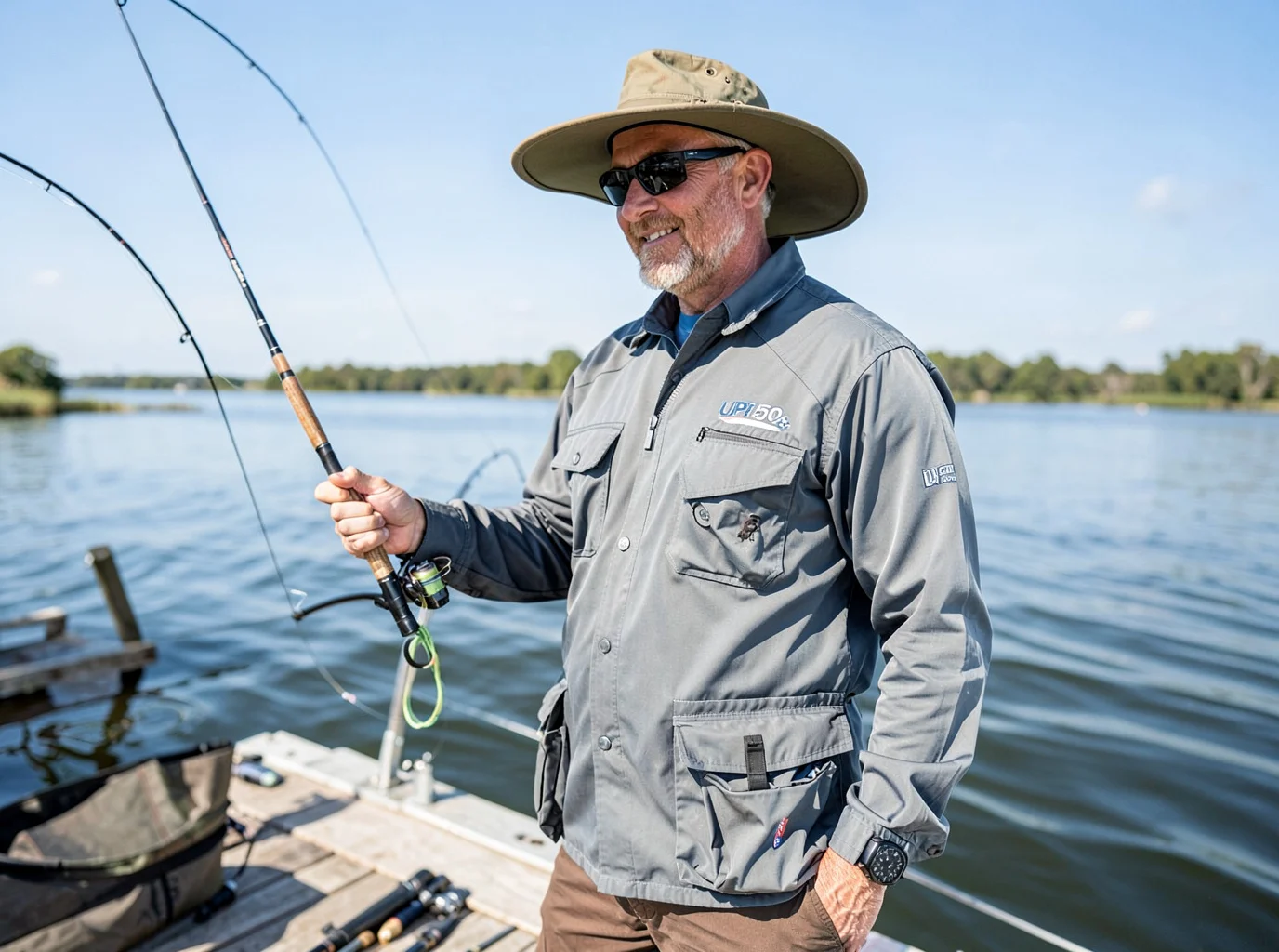
Not every trip needs the full gear-up. An hour or two on the dock with a wide-brim hat, polarized sunglasses, and sunscreen already applied? Casual clothing does the job fine. Comfort and mobility matter more than UPF ratings when you're not out there long enough to burn.
You can skip the specialized shirt for low-spray, low-wind freshwater fishing (no wind, no spray, no real reason to upgrade), mornings that start cool but warm up fast (a light base layer beats committing to a full fishing shirt), short-sleeve-and-shorts hot days at the lake where sunscreen covers what's exposed, or shore-fishing and light-duty stuff where a performance tee or polo covers it.
A moisture-wicking athletic shirt with a cap handles casual days. Save the UPF 50+ gear for full-day sun, saltwater spray, or charter trips where venting actually earns its price tag.
Do Fishing Shirts Work? A Practical Test Before Buying
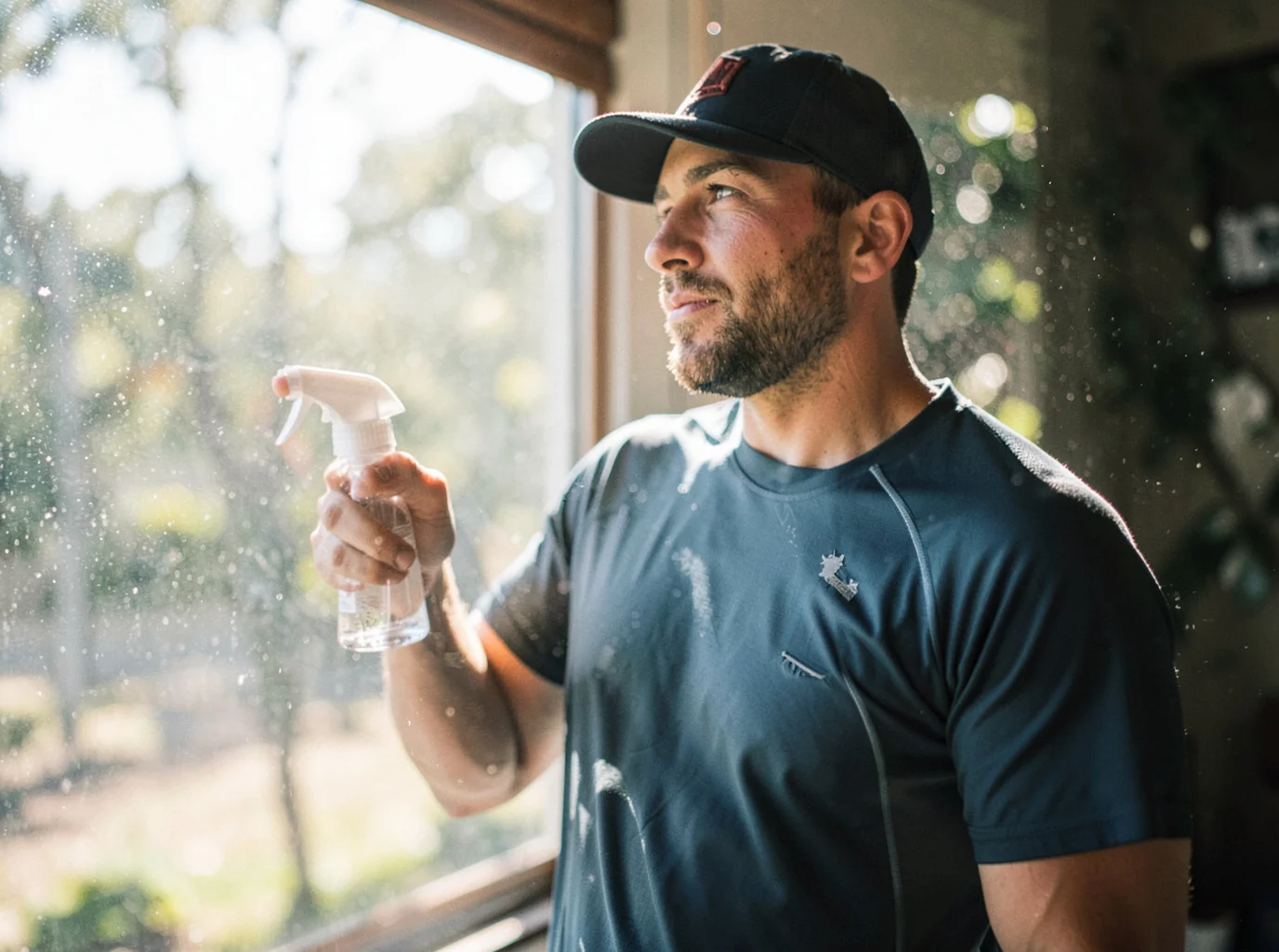
You don't need a lab to figure out if a fishing shirt is legit. You need a window and a spray bottle.
Check the tag first. Skip anything vague. You want AATCC 183 listed, because that standard tests UV transmission both dry and wet, which matters since your shirt won't stay dry for six hours on the water. AS/NZS 4399 is the other credible stamp. Some brands cite ASTM D6603 or UV Standard 801, the latter testing fabric stretched and wet — the closest thing to real fishing conditions a lab can simulate.
Watch the language, too. Words like "finish," "treatment," or "coating" mean the UV protection sits on top of the fabric, not woven into it. Coatings wash out. A "UPF 50+ through 100 washes" claim is the number you want, because it proves the protection survives your laundry routine, not just the first wear.
Three Tests You Can Run at Home
Hold it to light. If you see the weave clearly, that's a loose knit relying on a coating, not dense fabric doing the real work.
Wet a section. If it turns noticeably more see-through, wet UPF performance drops, and so does your protection mid-cast.
Stretch 10 cm to 15 cm. If it doesn't snap back, the knit's recovery is weak, and UV blocking degrades the moment you reach for a cast.
The Simple Decision Rule: Fishing Duration, Weather, and Water Type
Three variables decide whether you need this shirt, and none of them are your ego. Duration comes first. If you're running the 15-minute rule—work a spot, move if nothing bites—across a full day, those short stops add up fast. Ten stops means two and a half hours of sun exposure, even though each individual stretch felt quick.
Weather is next. Falling barometric pressure with 60–100% cloud cover extends the bite window, which sounds great until you realize "extended window" means "extended time outside." Bright sun compresses feeding into low-light hours instead, so chasing that window puts you out during peak UV, not away from it.
Water type closes the decision. Saltwater spray, or moving water after rain when current picks up, means constant dampness against your skin—exactly where cotton turns clingy and quick-dry fabric earns its cost. Clear water, short morning window? Skip the shirt.
Conclusion
I turned the color of a boiled crawfish before I learned that a fishing shirt is just physics doing its job while your regular tee gives up by lunchtime. The UPF sun protection shirt earns its price tag when you compare actual burn versus zero burn, and the quick-dry fabric wins the second you stop feeling like you're wearing a soaked towel at hour three.
If you're fishing for forty-five minutes in the shade with a hat on, save your money — nobody needs a $90 fishing shirt for a lunch break. But if you're out there for hours, exposed, sweating, questioning your life choices under an unforgiving sun, that's exactly when the extra investment stops being marketing and starts being common sense.
Go check the UPF tag on whatever's in your closet right now. I'll wait.Request a custom wholesale price for Fishing Shirts based on your required specifications.