You've researched the fly, studied the water, and dialed in your leader length—yet you still walked away with a light stringer. Before you blame the fish, take a hard look at what's on your back. Trout and other freshwater species see the world in ways most anglers never consider, and fish color perception plays a bigger role in whether you go home skunked or successful than most gear guides admit. Certain hues act like a flashing neon sign broadcasting "predator here" straight through gin-clear shallows.
Below, we're breaking down the specific colors that spook trout fastest, the science behind trout vision colors and light refraction underwater, and exactly what to wear instead so your next cast counts.Brands can develop custom Colors Of Fishing T-Shirts in muted, low-visibility shades.
Bright White
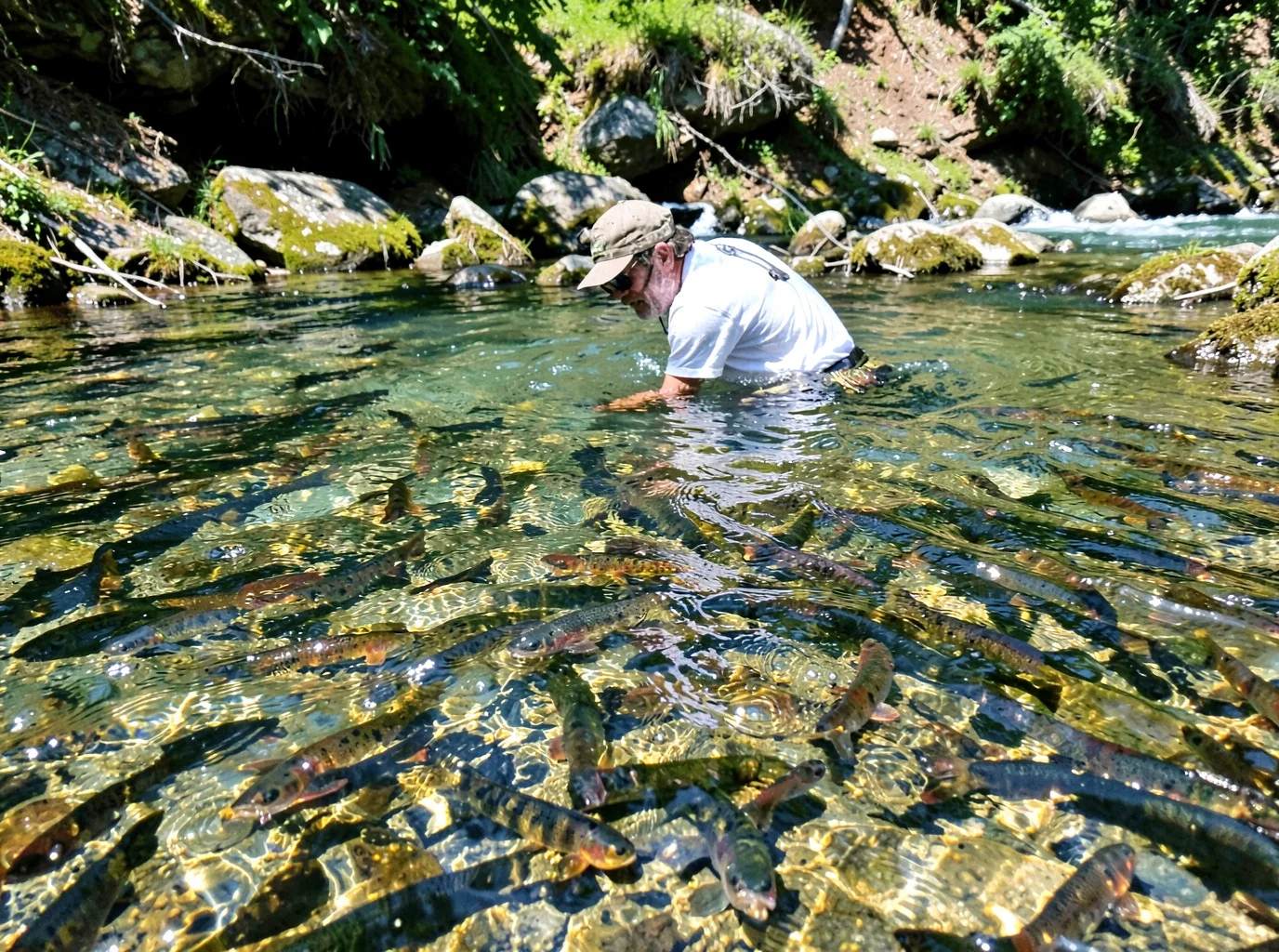
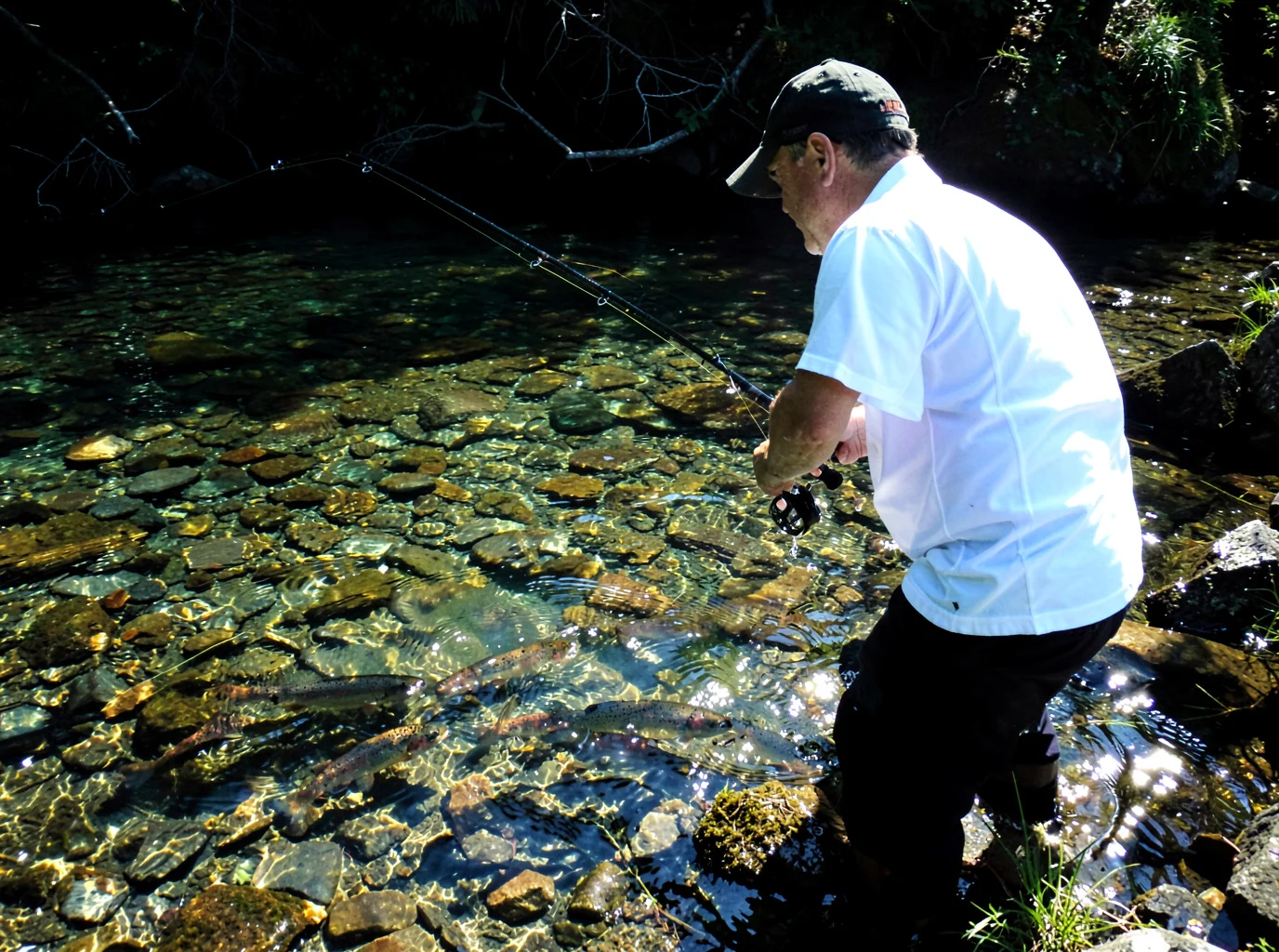
Nothing on the water reflects more light back into a fish’s eye than a stark white shirt. That’s basic physics, not folklore. White fabric bounces nearly the full spectrum of sunlight instead of absorbing it, and trout pick up that glare almost instantly because their eyes are built to detect subtle shifts in light intensity from below.
Why It Backfires in Clear Water
Trout and other freshwater species have photoreceptors tuned for movement and brightness contrast against the sky. When you’re standing in a shallow creek or wading a gin-clear lake, your silhouette appears against the water’s surface from the fish’s upward-looking vantage point. A bright white shirt turns that silhouette into a glaring flash. Even overcast days don’t help much. Diffused light still catches white fabric and radiates outward, especially at odd casting angles.
The Backlit Trap
You’re casting into low afternoon sun, and your white sleeve lights up like a lantern with every backcast. Fish holding in a pool downstream see that flash before your fly ever touches the water. Guides on Montana’s Bighorn have long noted that anglers in white or pale gray shirts spook more fish per run than those in muted tones. The color itself telegraphs danger before technique even comes into play.
Shallow Water Makes It Worse
In depths under three feet, there’s less water column to diffuse or scatter that reflected light. Bright white in shallow riffles or spring creeks removes any element of surprise. If you’re chasing spooky, pressured trout in low, clear flows, white belongs in your closet, not your fishing bag. Swap it for something that blends rather than broadcasts.
Runfishapparel
You need the right shade, and you need gear that provides real UPF50+ protection and stealth performance. That's what Runfish Apparel does for anglers and brands.
Founded in 2009 and based in Guangzhou, China, Runfish is a source fishing apparel factory. For anyone building a fly fishing apparel line, that means consistent, verified quality without guesswork.
What They Manufacture
Their catalog focuses on shallow water fishing attire: UPF50+ fishing shirts , fishing polos, waterproof jackets, waders, and performance layers made for stealth fishing apparel programs. Every piece provides UPF50+ protection and uses muted, low-glare tones that keep trout calm.
Working With the Factory
MOQ: 100 pieces per style
Sampling: 7-day turnaround, with fees credited toward bulk fishing t-shirts orders
Certifications: ISO 9001, OEKO-TEX, BSCI
Facility: 18,000 sqm, 12 specialized production lines
Track record: 200+ apparel programs shipped to 50+ countries
They respond within 24 business hours, and fly fishing t-shirt factory visits in Guangzhou are available by appointment, Monday through Saturday.
Fluorescent Yellow, Neon Green, and Other High-Visibility Colors
Road crews and crossing guards wear fluorescent yellow-green because it’s the most detectable color the human eye can process in daylight. That same trait makes it the worst possible choice for anyone wading into a trout stream.
The Science Behind the Glow
Fluorescent pigments work differently than regular dyes. They absorb ultraviolet light and re-emit it as visible light, which is why a neon green shirt looks like it’s glowing even in flat, overcast conditions. Regular fabric just reflects the light hitting it. Fluorescent fabric adds extra brightness on top of that reflection, pulling in UV wavelengths humans can’t even see and pumping them back out as intensified color.
Trout vision responds to that intensity spike fast. Fish detect contrast and brightness changes more efficiently than fine color detail, and a fluorescent garment creates the sharpest possible contrast against a natural streamside backdrop. There’s no camouflage fishing clothing angle to work here. Bright colors scare fish precisely because these pigments were engineered to do the opposite of blend in.
Why Safety Standards Confirm the Problem
Look at the industrial safety world for proof. ANSI/ISEA 107-2020 permits fluorescent yellow-green, fluorescent orange-red, and fluorescent red for compliant high-visibility apparel. CSA Z96-15 lists the same core colors, plus bright yellow-green and bright orange-red as accepted backgrounds. AS/NZS 4602.1 narrows it further to fluorescent yellow-green and fluorescent orange-red, often paired with 50mm retro-reflective tape for maximum daytime and nighttime visibility.
These standards exist so a highway worker gets spotted from hundreds of yards away in low light. That’s the exact opposite of what a fly angler needs. If a color is certified to make a human stand out on a job site, it will absolutely make you stand out to a trout holding in three feet of gin-clear water.
Shallow Streams Amplify the Effect
Neon green or safety yellow at the edge of a narrow creek gives fish an unmistakable warning sign, especially when sunlight hits the fabric directly. Skip anything marketed as “hi-vis,” “safety yellow,” or “neon” for your next trip. Save that gear for the job site, not the water.
Bright Orange
Orange sits in a strange spot on the color wheel. Hunters swear by it for safety. Anglers should swear it off entirely.
Orange Reads as Danger
Trout vision colors research shows fish process wavelengths in the 570-620 nanometer range with unusual sensitivity, and bright orange falls right in that zone. Unlike blaze orange marketed to hunters for high daytime visibility to other humans, that same wavelength signature reads as an alarm bell underwater. Combine that with orange's tendency to hold its saturation even in low light, and you've got a color that doesn't fade into a streamside backdrop the way earth tones do. It practically insists on being noticed.
The Backlighting Problem
Stand on a gravel bar with the sun at your back, and an orange shirt doesn't just reflect light; it seems to pulse with it. Guides working pressured tailwaters have noted that clients in blaze orange or safety-orange gear consistently spook more fish per drift than those in drab colors, even when presentation and fly choice stay identical. They're reacting to a shape that doesn't belong in their world.
Shallow Flats and Skinny Water
In water under two feet deep, there's almost no buffer between you and the fish's line of sight. Bright orange in that setting removes any margin for error. Save the blaze orange for deer season. On the water, it broadcasts your presence instead of hiding it.
Bright Red and Pink
Red carries baggage most anglers don't think about until they're already thigh-deep in a spring creek. Physics explains why. Because red sits at the longest wavelength in the visible spectrum, and long wavelengths get absorbed fastest as light passes through water. In theory, that means red should fade quickly at depth. In practice, most fly fishing happens in shallow riffles and knee-deep runs where that fading never gets the chance to happen. The color stays vivid, and it stands out hard against green willows and gray streambed rock.
Pink doesn't get a pass either. Pink is red diluted with extra brightness; it reflects light almost like white while still carrying red's alarm-triggering hue. Fishing T-shirts Manufacturers know exactly how to push that saturation. Tulip's Permanent Fabric Dye in Bright Red and Bright Pink is formulated for maximum color intensity on cotton and poly-blend fabric. CHANEL's Rouge Coco Flash lineup lists shade 834 "Rose Turbulent" as a bright red-pink and shade 92 "Amour" as intense raspberry. Those industries chase visual pop on purpose. On a trout stream, that same pop reads as fish spook clothing.
Contrast Is the Real Culprit
Trout detect contrast far better than fine hue detail. Red or pink against a muted, earthy backdrop creates about as much contrast as the color wheel allows, especially under direct sun. Backlit casting arcs make it worse; a pink sleeve can flash like a strobe with every forward cast. Stick to olive, khaki, or tan instead, and save the red dye kits for craft projects, not waders.
Electric Blue and Highly Saturated Blue
Sky-blue polos feel like a safe bet. They're not. Once you cross into electric blue territory—that neon cyan on spec sheets as HEX #7DF9FF, at roughly 183° hue with 100% saturation and 75% lightness—you've picked a color that fights against everything camouflage fishing clothing is supposed to do.
Why This Blue Reads as Unnatural
Water absorbs blue wavelengths slower than red or orange, which means blue light travels deep and scatters wide. A highly saturated blue shirt exploits that physics against you. Variants like Vivid Electric Blue (#3ECAE8) or Deep Electric Blue (#2C75FF) hold their punch even several feet down. They stand out against the natural blue-green tint of the water instead of blending into it.
The Cyan Problem in Clear Streams
Electric blue's cyan lean—close to brilliant bluish green in color taxonomy—creates a color signature nothing in a natural streambed produces. Trout vision picks up that anomaly fast. In shallow water fishing attire, that mismatch is the whole issue. Nothing organic in the scene matches it, so it reads as foreign every time.
Stick with muted, desaturated blues if you want that color family at all, or skip it in favor of olive and khaki.
Glossy or Metallic Silver Fabric
Metallic silver looks sharp on a hanger. On the water, it's a mirror aimed straight at every fish in the pool. These fabrics are silver-coated nylon or metallized polyamide knits, originally engineered for EMF shielding. Surface resistivity is under 1.4 Ω/□, shielding effectiveness tops 55 dB, and the result is near-total light reflection. That's the whole point of the technology. It's terrible news if you're trying to stay hidden from fish.
The Heliograph Effect
Glossy silver bounces light in a tight, directional beam. Tilt your shoulder mid-cast under bright sun, and that shirt flashes like a signal mirror across the pool. Fish key in on sudden brightness spikes faster than hue shifts. A silver flash reads as an instant threat.
Skip It in Shallow Water
In skinny riffles or spring creeks, that flash travels unobstructed straight to the fish. Choose brushed matte fabrics in olive or khaki instead. They absorb light.
Conclusion
Trout see bright white, neon yellow, hot orange, saturated blue, and shiny silver from a long way off. Their eyes are built to catch movement and contrast, and those colors throw off both in spades. Cast in those tones and every drift reads as a predator coming in. Fish that live on spotting danger fast don't wait around to check if you're friendly.
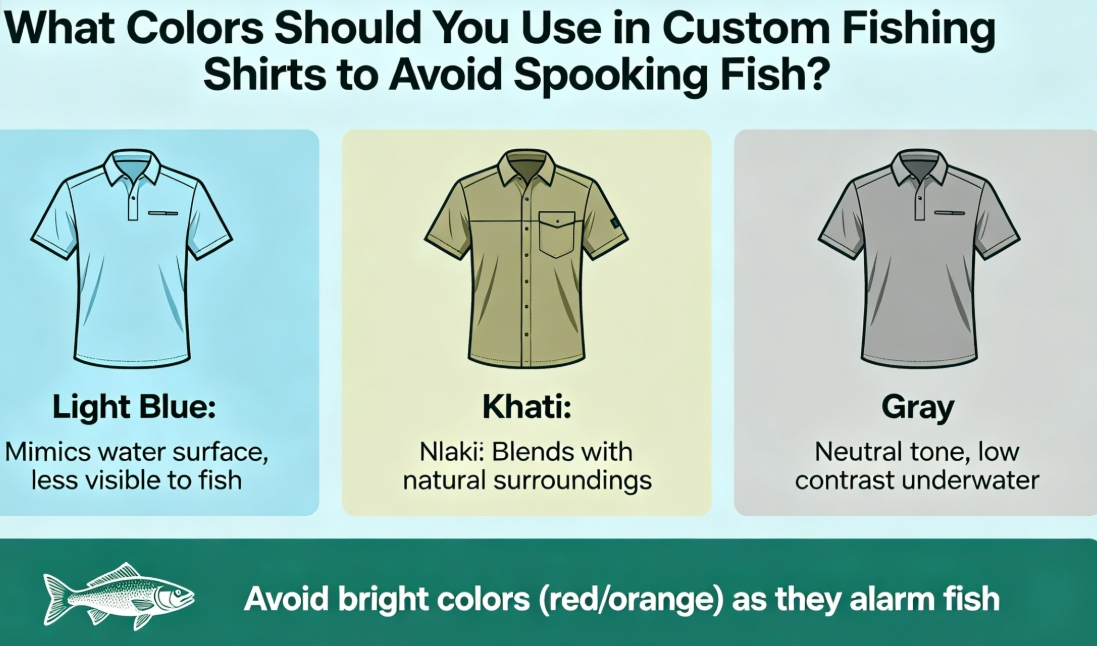
The fix is simple. Switch to olive, khaki, or muted gray-brown that blends into the streambank and sky.Request a custom wholesale price for Fishing T-Shirts based on your color requirements. You'll spook fewer fish before your fly hits the water.
Next trip, pack your clothes before you pack your fly box. Pull the flashy stuff out of rotation, layer in camo or earth tones, and watch your hookup rate climb. The fish simply won't see you coming. That edge costs nothing but attention to detail, and it's the difference between real fishing and just standing in a river hoping.