Ordering 12 custom fishing shirts for your tournament team shouldn't need a finance degree. Yet here you are — staring at setup fees, minimum order thresholds, and two printing methods every vendor calls the obvious choice.
The real answer comes down to something most comparison guides skip: what holds up through a full season of UV exposure, saltwater spray, and washing performance polyester every week .
Don't lock in a print method that fades by August. This breakdown covers real per-unit costs at the 5, 10, 25, and 50-piece marks. Plus, you get an honest look at which process survives when your fishing shirts are out doing actual fishing.
5–50 Piece Cost Breakdown: Setup Fees & Per-Unit Pricing
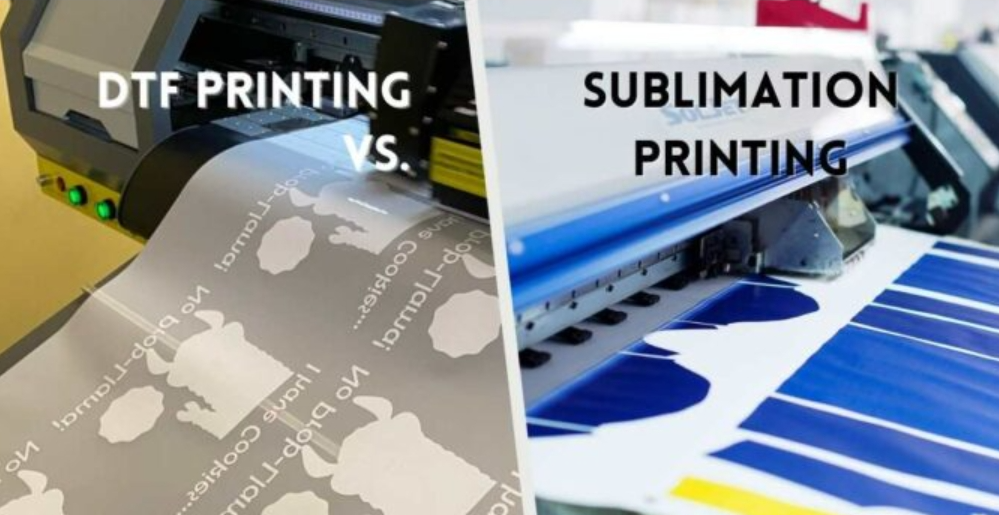
Setup fees are the quiet villain of small-batch custom fishing apparel. They don't look scary at first — $45 here, $60 there. But divide that fee by five shirts and you're already paying $12 per shirt before a single drop of ink hits fabric.
Here's the math that matters for custom fishing shirts in the 5–50 piece range.
The Setup Fee Problem (And Why It Hits Small Orders Hard)
Both DTF printing and dye sublimation transfer carry fixed setup costs. The difference is how those costs land based on your quantity.
With a $50 setup fee and $2.00 per-unit variable cost:
5-piece order : $60 total → $12.00 per shirt
10-piece order : $70 total → $7.00 per shirt
25-piece order : $100 total → $4.00 per shirt
50-piece order : $150 total → $3.00 per shirt
That's a 75% cost reduction from 5 pieces to 50 pieces — and the variable cost never changed. What changed is how many shirts share that fixed setup fee.
For orders under 20 pieces, setup fees often eat up 30–80% of your total cost . Go past 25 pieces and that figure drops to 15–35% . Most buyers never know this breakpoint exists.
DTF vs. Sublimation: Where the Numbers Split
DTF printing and sublimation differ in process. They also differ in where their costs pile up — and that gap matters for small orders.
DTF printing carries lower setup fees — often $0–$25 for simple files. There's no minimum order requirement and no special fabric needed. Print one polyester fishing shirt or fifty. The per-unit cost runs higher on small runs, but you can get started without a big upfront hit.
Dye sublimation transfer flips that model. Design setup costs run higher — $50–$150 for full-color fishing jersey files. But the per-unit cost drops fast as volume goes up. It's a solid deal at 25–50 pieces of the same design — tournament team jerseys, club event shirts. For an Etsy seller testing a five-piece run, the math is harder to justify.
Order Size | DTF Est. Per-Unit Cost | Sublimation Est. Per-Unit Cost |
|---|---|---|
5 pieces | $14–$18 | $18–$25 |
10 pieces | $10–$13 | $12–$17 |
25 pieces | $7–$9 | $7–$10 |
50 pieces | $5–$7 | $5–$7 |
Estimates include setup fee amortization. Actual quotes vary by vendor and design complexity.
The Tiered Pricing Reality
Most fishing apparel vendors price custom fishing shirts across set quantity breakpoints. Say you need 9 pieces and the 10-piece rate kicks in at ten. Adding one shirt drops your per unit printing cost by a real margin. It's worth checking before you finalize your order.
For small orders in the 5–10 piece range, DTF wins on total spend. Sublimation starts closing the gap around 20–25 pieces. At 50 pieces of 100% polyester fishing shirts, both methods land at roughly the same price. At that point, the decision stops being about cost — it shifts to durability and fabric compatibility.
That's the next part of this conversation.
Print Quality on UPF Moisture-Wicking Polyester
Performance polyester doesn't forgive mistakes. That tight, chain-link mesh weave pulls sweat away from your skin during a July tournament. It pushes moisture through to the outer shell. That same structure is what makes printing on it so demanding.
DTF and dye sublimation each behave differently on UPF moisture-wicking polyester. Knowing why gives you better questions to ask before you place your order.
The Dye Migration Problem Nobody Warns You About
Here's what happens inside a polyester fishing shirt during curing. Heat activates the dye molecules already embedded in the fabric. They migrate. They move up into fresh ink. A white print can come out pink. A clean graphic can look like it sat in a hot car all afternoon.
This isn't a vendor error. It's physics.
The trigger temperature is around 300°F — a standard curing threshold for many print shops. On cotton, that's fine. On moisture-wicking polyester, it starts a color shift problem.
The fix is non-negotiable: cure temperature must stay at or below 250°F. No exceptions for UPF polyester. Shops that skip this adjustment will hand you shirts that look great on Tuesday and tell a different story after one wash.
After curing, there's another step most buyers never hear about: a 48-hour sit time before any stretch or wash testing. Color shift from dye migration can be slow and subtle. Rush that window and you get a false pass on quality.
What Good Results Look Like on This Fabric
Get the technique right and moisture-wicking polyester prints with sharp, vivid results. Colors stay vibrant. Fine details come through clean. The fabric stays lightweight and soft — no stiff ink layer trapping heat on a hot dock.
For DTF on polyester fishing shirts, the film transfers bond to the fabric surface. They don't dye into the fiber. So dye migration is less of a risk. But the polyester's low surface energy can still cause adhesion problems without proper prep. Good DTF vendors use a pretreatment formula built for performance fabrics.
For sublimation, the process works with polyester's dye receptivity. The ink becomes part of the fiber itself. On 100% polyester , this gives you the most vivid, breathable result of any print method. Colors sit inside the fabric, not on top. There's zero hand feel.
One practical note: UPF rating is independent of print method . A shirt rated UPF 50+ keeps that rating after printing. The tight weave does the UV blocking work — what goes on top doesn't change that. Some 100% polyester fabrics reach UPF 100+ based on weave density alone.
The Quality Checklist Worth Asking For
Before you approve a sample run of your custom fishing jerseys , raise these questions with any vendor:
What cure temperature do you use on performance polyester? (Above 250°F? Keep looking.)
Do you use a low-bleed white underbase or gray underbase for light colors on dark polyester?
How long before wash testing — 48 hours minimum?
Do you pretreat polyester for DTF adhesion?
A vendor who answers these without hesitation has printed on moisture-wicking fabric before. One who pauses — or shifts the conversation to their equipment — probably hasn't.
Your fishing shirts are doing a lot of work. UV protection. Moisture management. Saltwater resistance. The print method you pick needs to work with that structure, not against it.
Outdoor Durability & Print Longevity in Fishing Conditions
A fishing shirt earns its keep the hard way. Eight hours on the water in July, salt spray drying stiff on the sleeves, the sun beating down on the same shoulder panel all afternoon. Whatever print is on that shirt has to survive all of it — then the washing machine, then do it again next weekend.
This is where DTF and dye sublimation split in ways the cost table doesn't show.
What Sun and Salt Do to Printed Fabric
Ultraviolet exposure is the quiet enemy of printed apparel. It doesn't announce itself. It just works — breaking down ink pigments bit by bit until the tournament logo on your back looks more like a faint suggestion than a real design by end of season.
Salt makes it worse. Marine air carries moisture and fine particles that speed up surface breakdown on any ink-to-fabric bond. Saltwater fishing puts your shirt in one of the harshest print environments outside of industrial signage.
Here's how each method holds up:
Dye sublimation is the one that surprises people. The ink bonds into the polyester fiber — it doesn't sit on top waiting to peel or crack. That sounds like the more durable option. In practice, sublimation dyes have a known weak point with long-term UV exposure. Industry data flags rapid color fade under direct sun and salt conditions. A tournament shirt worn once a month may hold up fine. A shirt worn three times a week on a fishing boat through a full coastal summer — that's a real problem.
DTF printing with laminated pigment inks tells a different story. A well-laminated DTF transfer is rated for at least one year outdoors without major fading — even in high-humidity, UV-heavy, salt-air conditions. That covers a full fishing season with room to spare. The laminate layer acts as a physical shield between the ink and the elements. Sublimation has no equivalent protection.
The Wash Durability Factor
Outdoor durability and wash durability are two separate tests. A shirt that survives sun can still fall apart in the laundry.
Performance polyester fishing shirts get washed often — realistically once a week if you fish in them. That mechanical stress adds up fast. Sublimation holds a clear edge here. The dye bonds at the fiber level, not on the surface. So repeated washing doesn't lift, crack, or pill it at the edges the way it can with a surface transfer.
DTF transfers can match that lifespan under one condition: the laminate layer stays intact . A quality laminated DTF print can outlast cheaper sublimation work. Skip the lamination, and the print won't survive a full season of weekly washes on performance polyester.
Here's the honest breakdown:
Condition | DTF (Laminated) | Dye Sublimation |
|---|---|---|
UV / Direct Sun | ≥1 year with laminate | Rapid fade risk in sustained exposure |
Salt Air / Marine Environment | Good with protective coat | Not rated for long-term marine use |
Weekly Machine Wash | Durable if laminated | Excellent — dye is in the fiber |
Overall Outdoor Lifespan | 1–3 years depending on finish | Varies; UV is the weak point |
What This Means for Your Shirts
Your fishing shirts are on a saltwater boat five days a week. You need the print to look sharp through a full season. DTF with quality laminate is the stronger call. The UV and salt protection is built into the finish — sublimation can't match that.
Your shirts see moderate weekend use — freshwater fishing, afternoon tournaments, occasional lake days. Sublimation's wash durability and breathability make it a solid competitor. The UV weakness matters less when sun exposure is occasional, not daily.
Worth knowing: you can extend the life of either method .
DTF: A spray UV-protective coating applied after printing adds real protection in harsh marine conditions.
Sublimation: Store shirts out of direct sunlight between uses. It slows the fading curve.
Neither fix is a miracle, but both work.
The print on your fishing shirt should outlast the season you ordered it for. Ask your vendor about UV stability and lamination before you commit to a run. That one question sorts vendors who have printed fishing apparel from those who have only done t-shirts.
Scenario Guide: Tournament Teams, E-Commerce Tests & Club Events
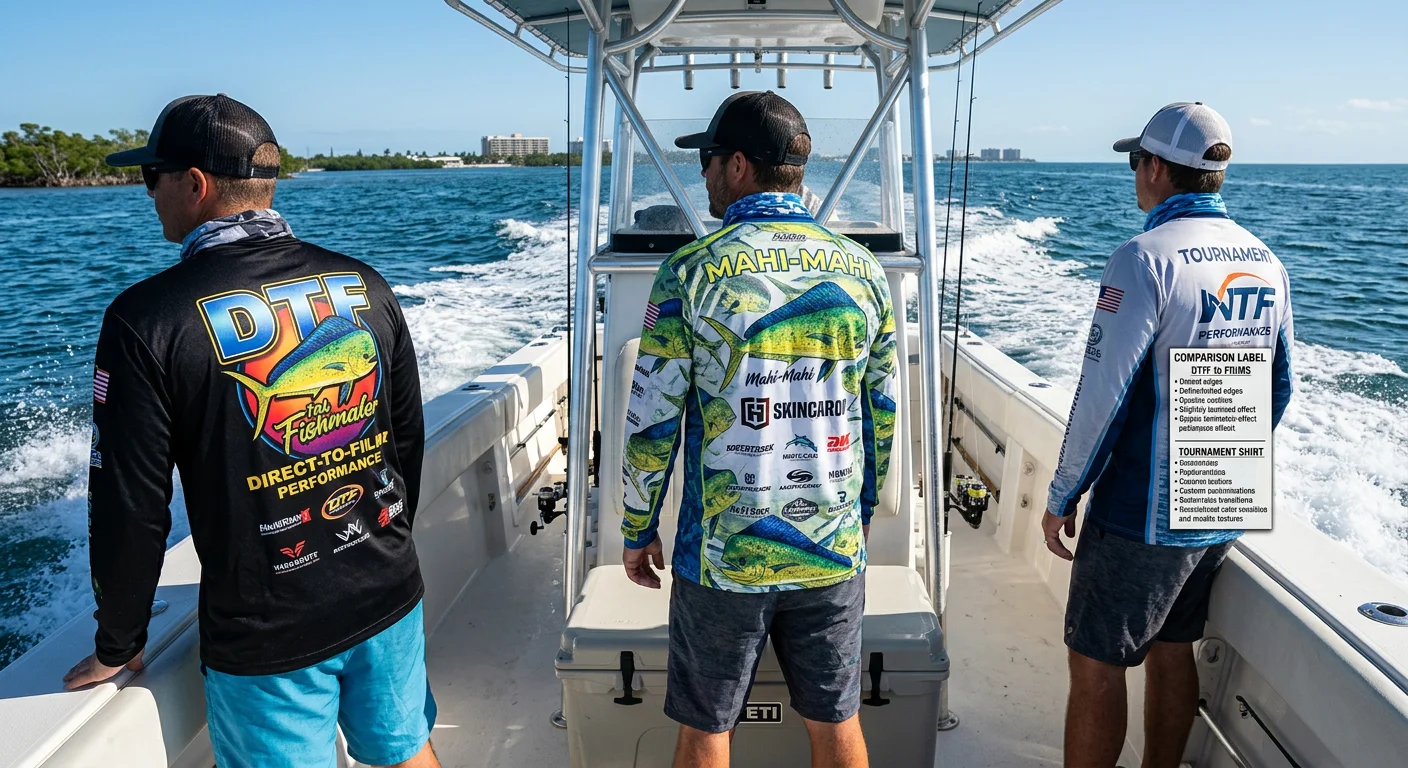
Three buyers are asking about custom fishing shirts. Each one has different quantities, different budgets, and a different idea of what "good enough" means. Here's the right answer for each of them.
Tournament Team: 12–20 Pieces
A tournament team needs shirts that look sharp at the weigh-in. They also need to hold up through an entire season of hard use. That means saltwater, sun, and washing every week — a tough combination.
For 12–20 pieces, DTF with quality lamination is the right call. Setup costs are low. There's no minimum order pressure. The laminated finish handles coastal conditions well — and sublimation has a real UV weakness in those environments. Your per-unit cost lands in the $10–$14 range at this quantity. That's solid value for team apparel worn all season long.
One smart move: order 20 instead of 18. That small bump often crosses a vendor's pricing tier. Your per-unit cost drops by a noticeable margin, and you gain a couple of spare shirts.
E-Commerce Test Run: 5–10 Pieces
Etsy sellers and small fishing apparel brands testing a new colorway need low risk. Five to ten pieces is a validation order. It's not a commitment.
DTF wins here, no debate. No setup minimums. No fabric restrictions. Total spend stays manageable — around $14–$18 per unit at five pieces . Sublimation carries a higher setup fee. That makes a five-piece test run hard to justify on cost alone.
The design sells? Scale to 25–50 pieces and take another look at sublimation. At that volume, the cost math changes. Sublimation's breathability on 100% polyester also becomes a real selling point for a performance product.
Club Event Shirts: 25–50 Pieces
At 25–50 pieces, the math shifts. Setup fees spread across more shirts, so sublimation becomes a strong competitor on price. On 100% polyester, it also delivers the most breathable, vibrant result of any print method.
For freshwater club use — lake days, casual tournaments, seasonal events — sublimation's wash durability is a clear win. The color bonds inside the fiber itself. It won't peel, crack, or fade from repeated laundry cycles the way surface transfers can.
At 50 pieces, both methods land near $5–$7 per unit . At that price point, your choice comes down to use case:
- Coastal fishing or heavy sun exposure → go DTF
- Inland use or high-wash-frequency → go sublimation
Conclusion
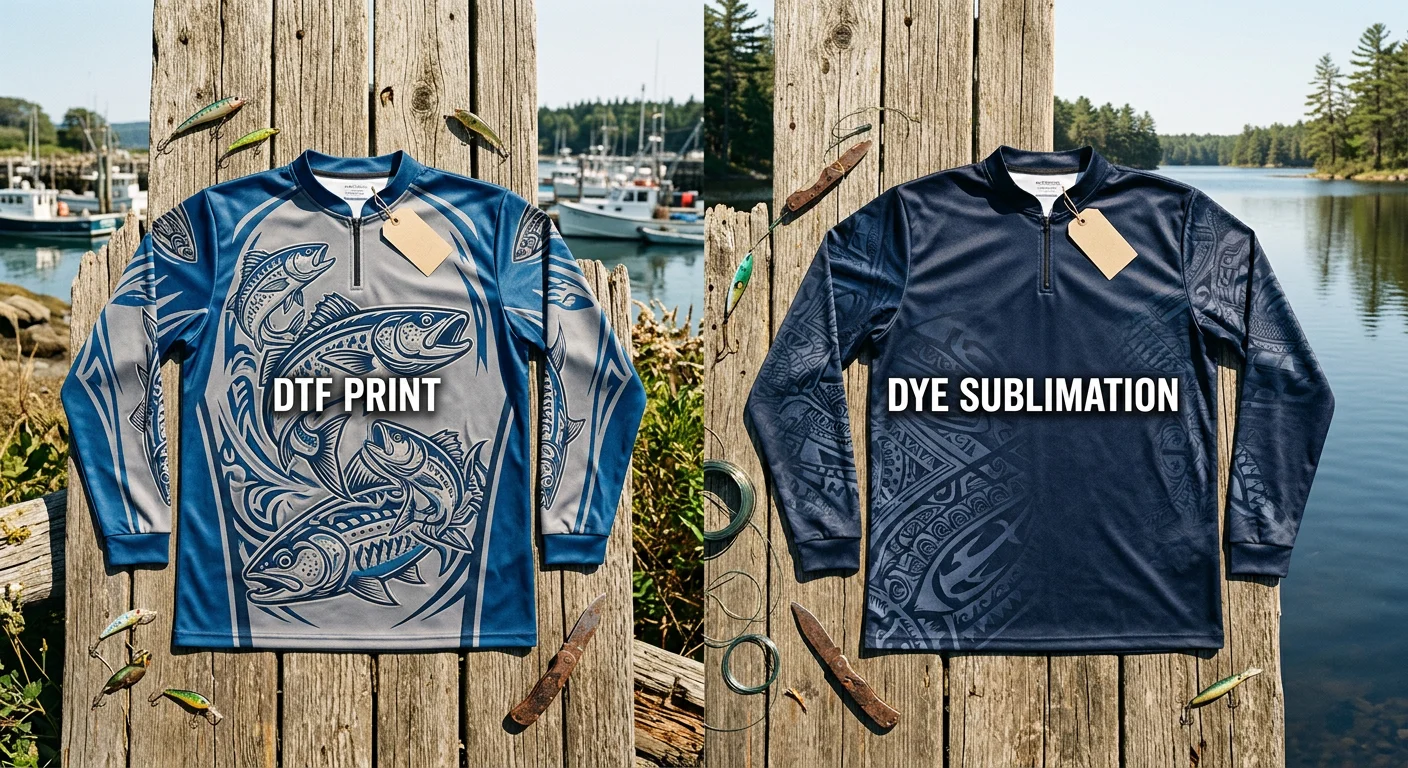
Here's the honest truth after breaking down every cost tier and durability test: DTF wins the small-order math — for those tournament jerseys you need in two weeks.
Ordering fewer than 25 pieces on moisture-wicking polyester? DTF makes more financial sense. No setup fees eating your budget. No 24-piece minimums forcing you to order shirts for people who already quit the team.
But building an e-commerce brand with full-color fishing jerseys meant for repeat runs? That's a different story. Dye sublimation's fade-resistant vibrancy holds up wash after wash, saltwater season after saltwater season. The colors stay sharp long enough to justify the setup investment.
The next step is straightforward:
Get a quote for your exact quantity from a DTF supplier of fishing apparel
Get a quote from a sublimation printer
Do it this week
See the price difference in writing. It will make the decision clear.
The right print method isn't the fanciest one — it's the one still looking sharp on the water three seasons from now.